
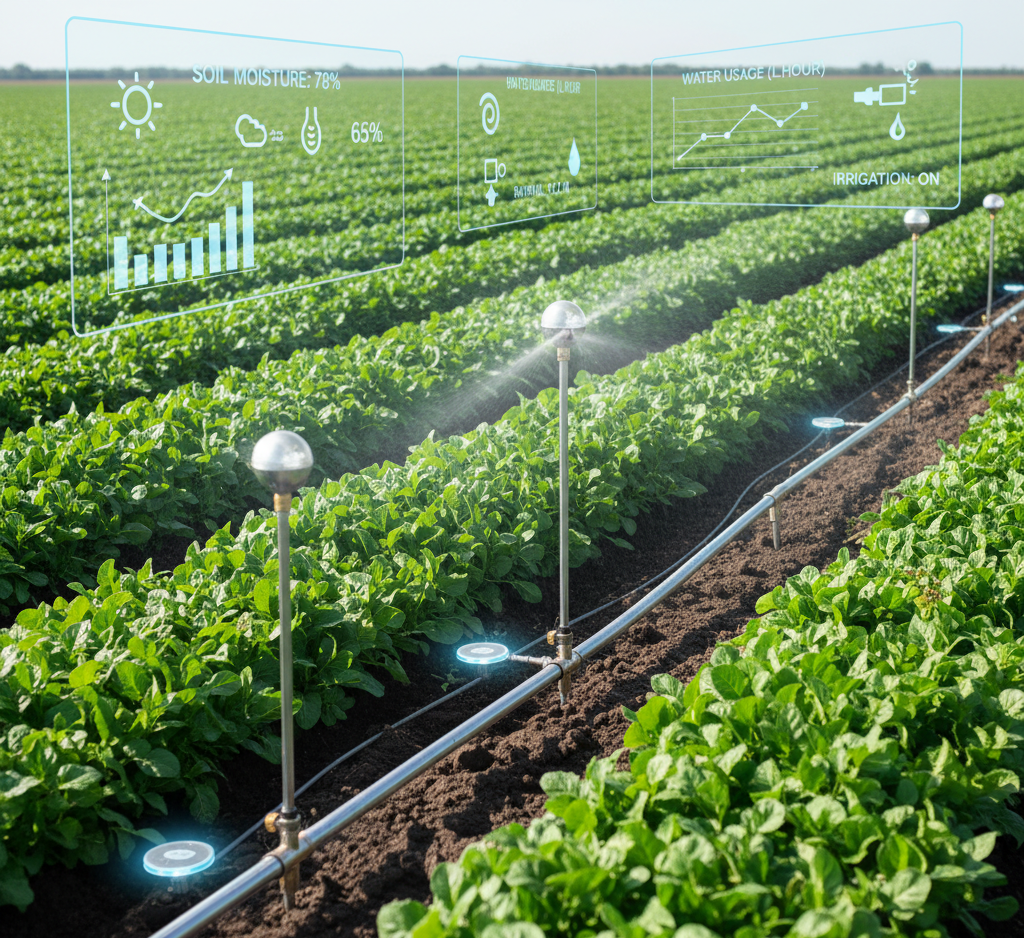
Across the world, millions of litres of water are wasted each day by traditional irrigation systems. coming! Is that right? Absolutely, my friend! We can say it in that way if we compare it to nowadays’ technology. Now let me ask you: Can technology help farmers save water without losing productivity? Definitely yes, that’s where smart irrigation comes in, a modern way to manage water efficiently, using data and sensors. This technology is critical, as numerous studies have found that agriculture accounts for approximately 70-80% of global freshwater consumption (Di Gennaro et al., Liu et al.).
1. What Is Smart Irrigation?
Smart irrigation means using sensors, weather data, and automated controls to water plants only when they really need it. Instead of relying on a fixed schedule or manual guesswork. In order for these systems to function correctly, they use real-time data to make precise, efficient decisions.
The key technologies used in smart irrigation systems include:
- Soil moisture sensors, which measure the amount of water available to plant roots (Ali et al.).
- Weather-based controllers, which use data like rainfall and evapotranspiration (ET) (the water lost from soil and plants) to adjust watering schedules (Di Gennaro et al., Ali et al.).
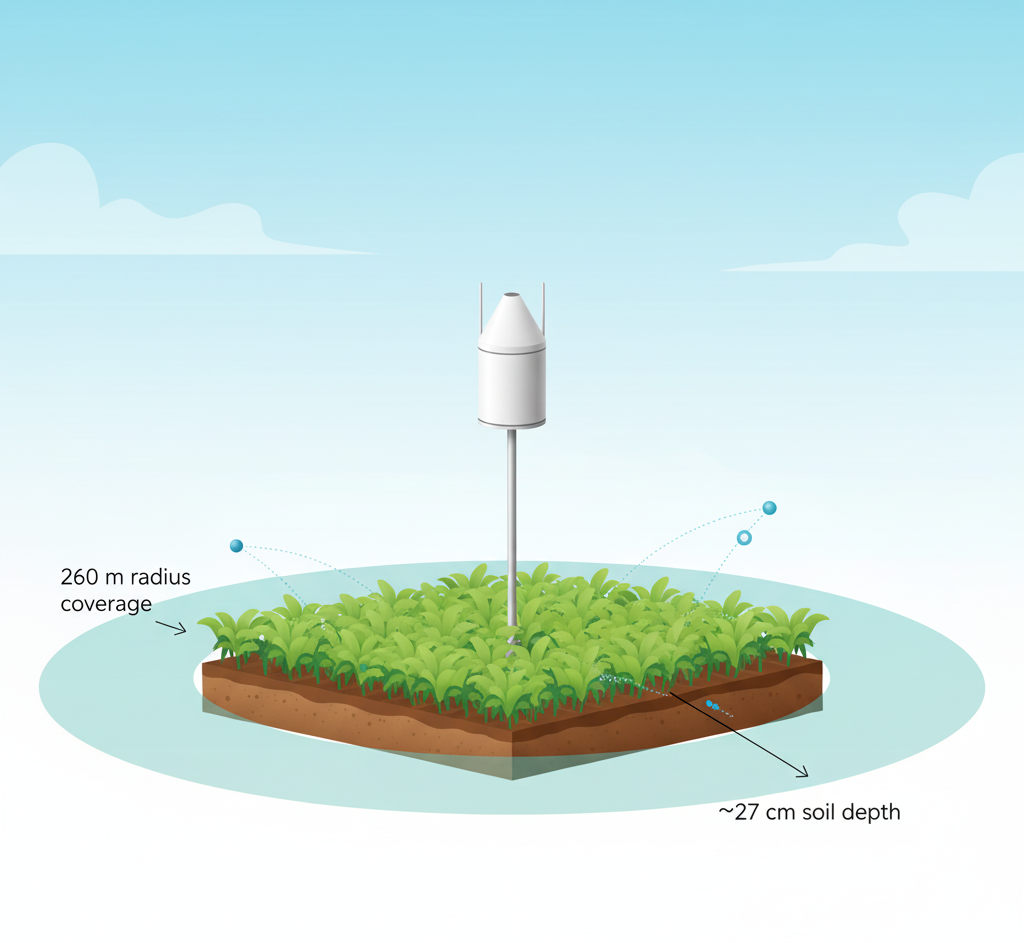
- Cosmic-Ray Neutron Sensing (CRNS), a sensor above the ground, measures the average soil moisture within a radius of over 260 meters (equivalent to 27 ha) and to a depth of around 27 cm, which is directly relevant to a field. (IAEA-TECDOC-1809)
- Automated valves and pumps that can be turned on and off remotely to deliver water (Ali et al.).
- Mobile apps that allow farmers to monitor field conditions and control their irrigation systems from anywhere (Zhang et al.).
It’s like giving water only when your crops are thirsty, not by habit. Isn’t that less of a headache, my friend?
2. Why It Matters in 2026
Let’s say the need for smart irrigation is driven by a combination of environmental, economic, and market forces that are expected to intensify by 2026.
The Environmental Need
The unpredictable climate can cause more frequent droughts, unpredictable rainfall, and widespread water scarcity, putting immense pressure on global water supplies (Ali et al., TechSci Research). Now, with agriculture consuming over 70% of the world’s freshwater, adopting more efficient irrigation methods is essential for sustainability (Di Gennaro et al.). Therefore, these environmental pressures are forecast to intensify, making the adoption of smart irrigation not just beneficial but essential by 2026.
The Economic and Regulatory Pressure
Smart irrigation helps farmers manage the rising costs of water and energy, which is a headache for them. At the same time, if you’re lucky enough, some governments are increasingly creating initiatives to promote water conservation, encouraging the adoption of these technologies (MarketsandMarkets).
Market Growth
The demand for these systems is growing rapidly. “The global Smart Irrigation Market was valued at USD 1.53 billion in 2024 and is projected to grow to USD 2.65 billion by 2030.” (MarketsandMarkets). This growth reflects the increasing recognition of smart irrigation as a vital tool for modern agriculture.
3. How Smart Irrigation Works
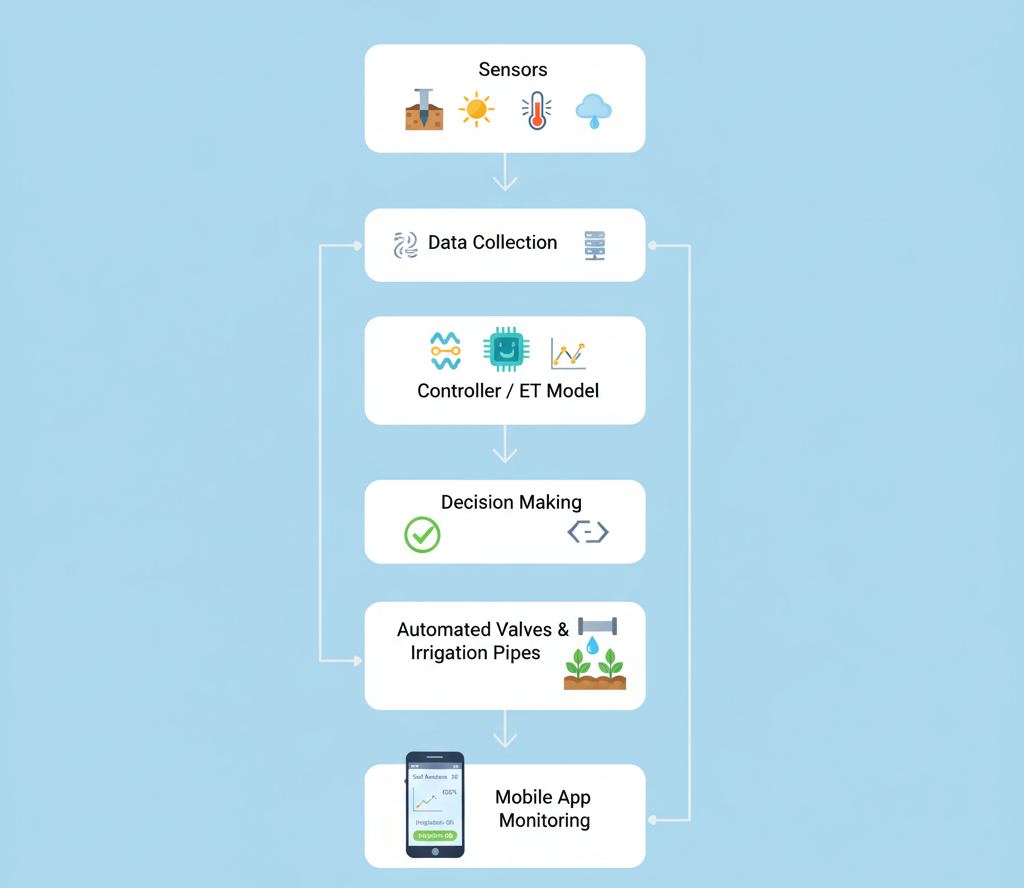
Imagine your irrigation system could sense when your plants are thirsty and then, boom, water them automatically. That is the core function of a smart irrigation system, which relies on a few key components working together.
- Sensors: Acting as the eyes and ears in the field, these devices collect real-time data on soil moisture, temperature, and local weather. This precise information given by the sensor helps prevent over- or under-watering, directly contributing to improved crop yield and soil health (Ali et al., Zhang et al.).
- Controllers: The “brain” of the system, a central controller or gateway, analyzes sensor data and weather forecasts. Using crop-specific models like evapotranspiration (ET), it decides exactly how much water is needed and when, ensuring no water is wasted (Di Gennaro et al., Zhang et al.).
- Automation: The controller automatically opens and closes valves to deliver the precise amount of water, freeing farmers from manual labour and reducing operational costs. The entire process can be monitored and managed from a phone or computer, saving valuable time (Zhang et al.).
Real-world studies confirm these benefits.
- Case 1: Italy. A study on tomato and melon farms in Tuscany utilised a smart irrigation system that used sensors and weather models. Studies show this system successfully reduced water consumption by 50% compared to traditional local practices (Di Gennaro et al.).
- Case 2: China. In the Jinghuiqu Irrigation District, advanced sensors monitored winter wheat fields over a period of six years. The results showed that “the field water use efficiency significantly improved from around 0.50 to 0.77,” demonstrating a major increase in how effectively water was used (Song et al.).
4. Benefits of Smart Irrigation
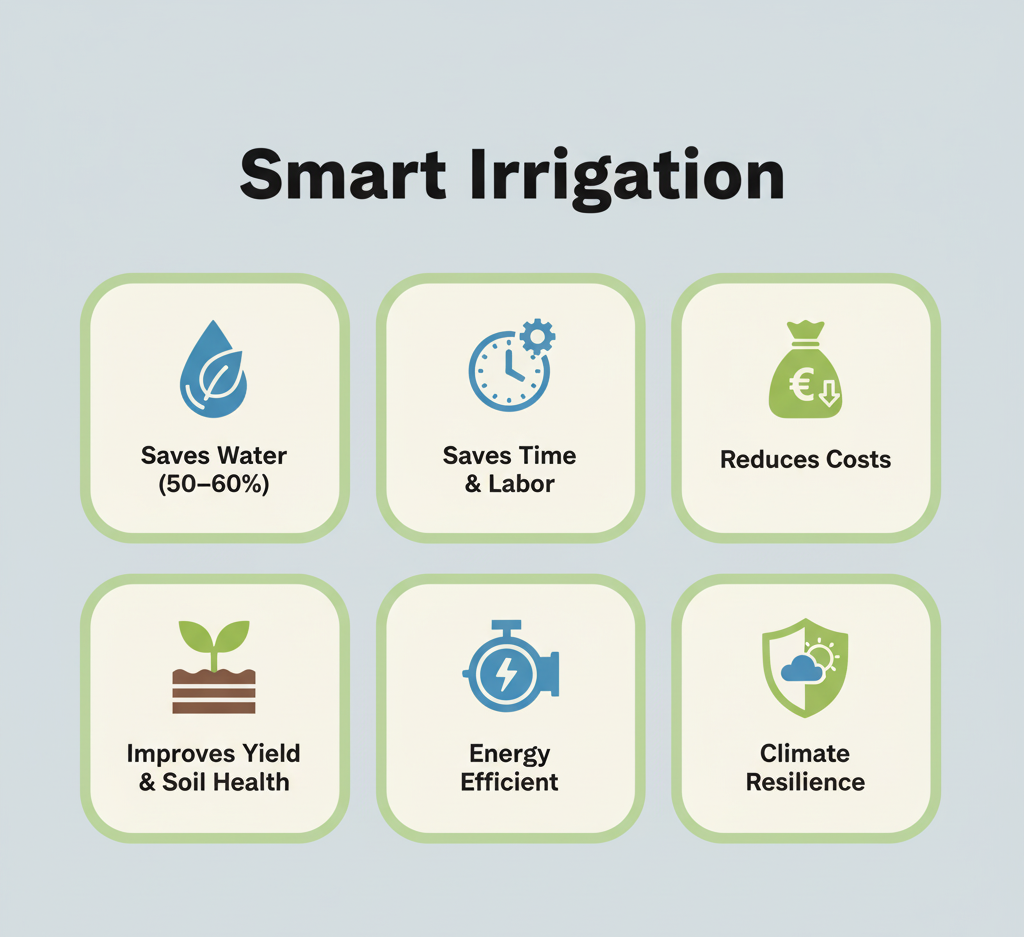
- Saves Water: By watering only when and where needed, systems can cut water use significantly, with studies showing reductions of up to 50-60% (Di Gennaro et al.).
- Saves Time and Energy: Automation eliminates manual intervention, with one study on rice cultivation finding labour savings of up to 88% during irrigation periods (Ali et al.).
- Reduces Costs: Lower water, energy, and labour bills lead to financial savings over time (Ali et al.).
- Improves Yield and Soil Health: Precise watering can increase crop yields while preventing over-irrigation, which protects soil by reducing nutrient loss (Ali et al., Liu et al.).
- Helps Adapt to Climate Change: Efficient water management makes farms more resilient to droughts and unpredictable weather (Ali et al., TechSci Research).
5. Challenges to Adoption
Despite the benefits, several obstacles can slow the adoption of smart irrigation. The high initial cost of sensors, controllers, and installation can be a barrier for many farmers, although component prices are declining (Di Gennaro et al., MarketsandMarkets). Additionally, a lack of knowledge or technical training is needed to operate and maintain these systems effectively (Ali et al.). Finally, infrastructure issues like poor internet coverage in some rural areas can prevent the use of remote monitoring and control, which are central features of these systems (MarketsandMarkets, TechSci Research).
6. Looking Ahead to 2026 and Beyond
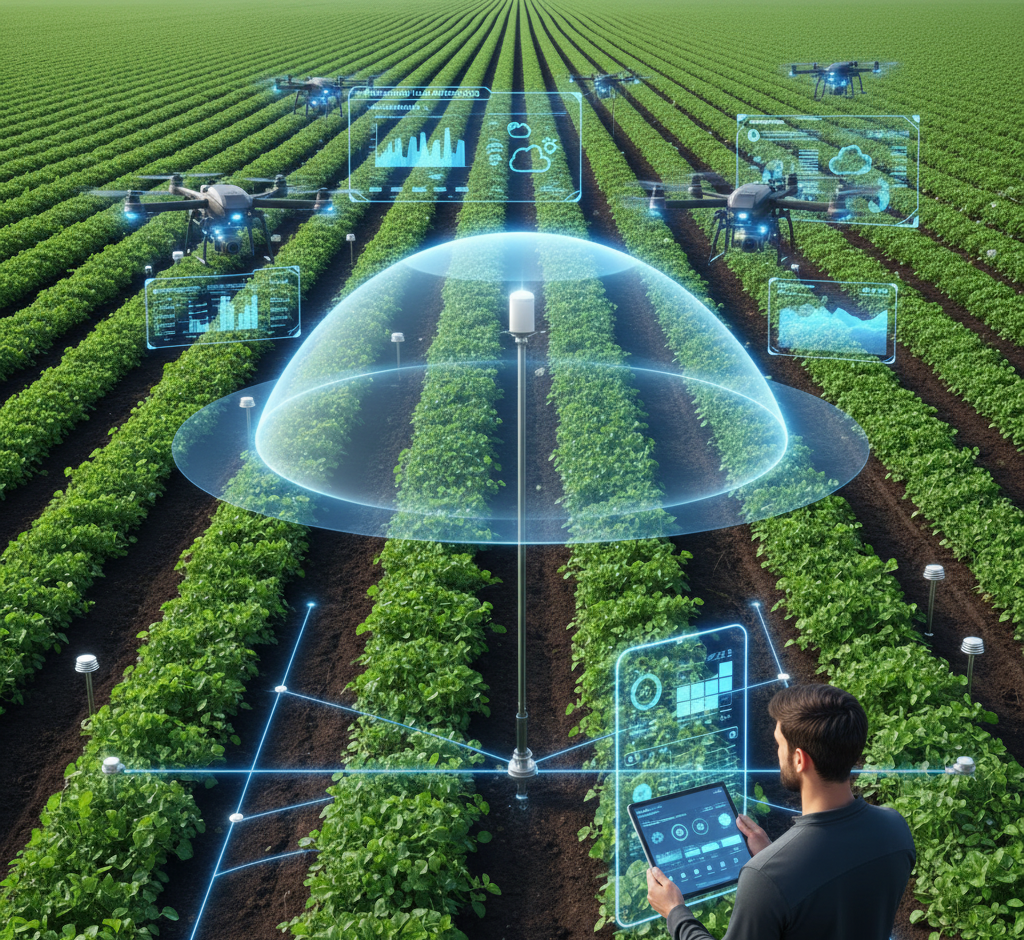
Advancements in data processing and connectivity are shaping the future of smart irrigation. Technologies like Cosmic-Ray Neutron Sensors (CRNS) are enabling soil moisture measurement over larger areas, bridging the gap between small point sensors and satellite data. Artificial Intelligence (AI) and edge computing are making systems even smarter by allowing for better predictions, faster, and localized decision-making without constant reliance on a distant cloud server (MarketsandMarkets, Zhang et al., TechSci Research). We can also expect more advanced sensors, improved weather forecasting models, and more powerful, user-friendly mobile apps that will make these systems easier to use and more effective (Ali et al., Zhang et al.). By 2026, smart irrigation is expected to become part of everyday farming practice, helping both small and large farms work smarter, not harder.
7. Conclusion
Smart irrigation is more than just technology; it represents a mindset shift toward precision and efficiency in agriculture. By using data to provide water exactly when and where it is needed. Smart irrigation helps save a critical resource, reduce operational costs, and helps ensure a stable food supply by making farms more resilient to a changing climate. Every drop counts, and with smart irrigation, every drop can be used wisely.
Please leave your opinion, recommendation, or questions below in the comment section.
8. Sources
This article is based on findings from the following research papers and market analyses:
- Development of a low-cost smart irrigation system for sustainable water management in the Mediterranean region (Di Gennaro et al.)
- Smart Irrigation Technologies and Prospects for Enhancing Water Use Efficiency for Sustainable Agriculture (Ali et al.)
- Research and Development of an IoT Smart Irrigation System for Farmland Based on LoRa and Edge Computing (Zhang et al.)
- Intelligent and automatic irrigation system based on internet of things using fuzzy control technology (Liu et al.)
- Application of Cosmic-Ray Neutron Sensor Method to Calculate Field Water Use Efficiency (Chen et al.)
- Cosmic Ray Neutron Sensing: Use, Calibration and Validation for Soil Moisture Estimation (IAEA-TECDOC-1809)
- Smart Irrigation Market Reports (MarketsandMarkets, TechSci Research)
Super super nice I find that it’s super useful and insightful but may I mention just a comment to enhance the article more where you can introduce how the sensors works by adding the water potential concept and how the water move over the plant. the sensors will function by calculating or comparing the measured value of water potential of soil and the one of plant try to detail this point 👏
Thank you, Redouane, for your time. Your feedback has been noted. And it’s planned to write separate articles for the topics you recommended.